

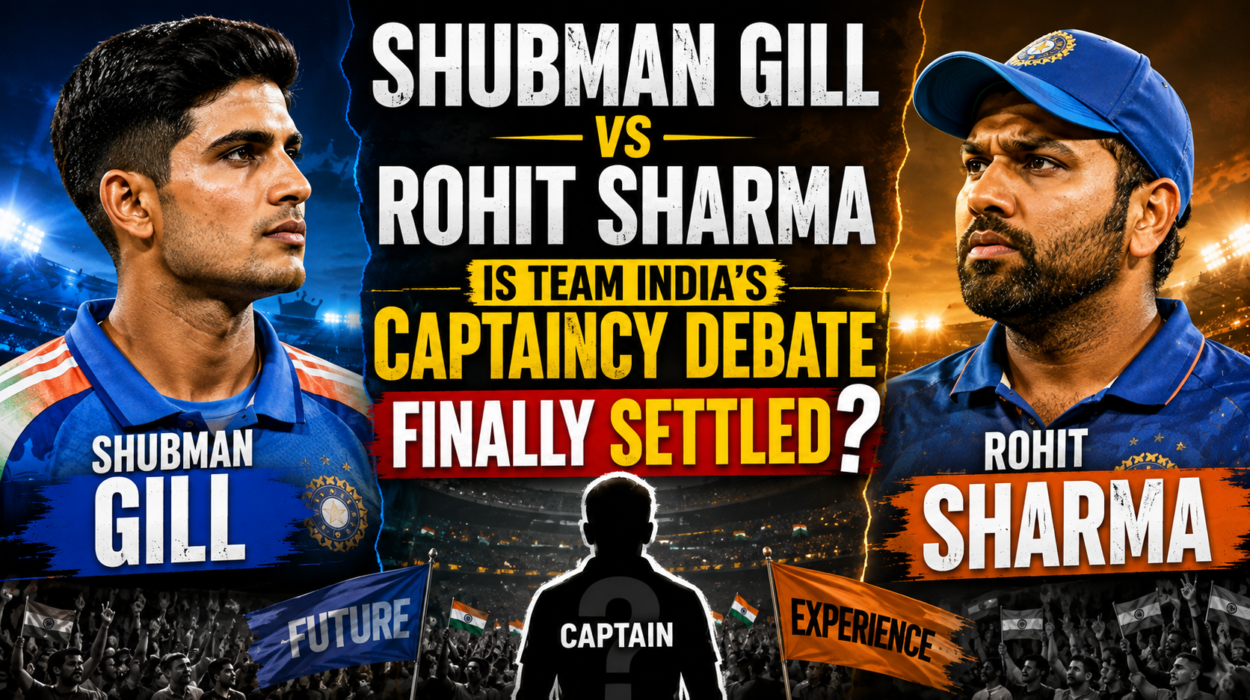
Indian cricket has never been short of debates, but few have gripped fans the way the Rohit Sharma vs Shubman Gill captaincy question has over the past year. One is the seasoned leader who has already delivered ICC silverware and redefined India’s approach at the top of the order. The other is the calm, technically gifted successor being groomed to carry the team into its next era. So where does this debate actually stand — and where is it heading?
The Case for Rohit Sharma
Rohit Sharma’s captaincy record speaks for itself. Since taking over across formats, he transformed India’s white-ball approach, pushing for fearless, high-intensity batting from the top of the order rather than cautious accumulation. That shift directly powered India’s title run in the 2024 T20 World Cup, and his leadership through multiple ICC tournaments has given him a legacy few Indian captains can match.
His strengths as captain go beyond his own batting:
- Tactical clarity in white-ball cricket — Rohit’s field placements and bowling changes in T20Is and ODIs are widely regarded as some of the sharpest in the modern game.
- Man-management — Senior players and young debutants alike have spoken about the freedom Rohit gives them to play their natural game.
- Big-match temperament — His record in ICC knockouts, both as a batter and leader, remains a major point in his favour.
The counterargument is age and format sustainability. Rohit is well past his mid-30s, and the selectors have already begun easing him out of Test cricket. The real question isn’t whether he deserves the captaincy — it’s how much longer he can hold it across every format.
The Case for Shubman Gill
Gill represents something different: continuity without disruption. He’s already captained India in bilateral series and an IPL franchise, and by most accounts, he has handled the pressure with a maturity that belies his age. His batting numbers across formats put him firmly in India’s top order for the next decade regardless of the captaincy outcome, which makes him a low-risk, high-reward choice as a long-term leader.
What makes Gill’s case compelling:
- Format versatility — Unlike some contenders, Gill isn’t a specialist in just one format. He’s built a résumé across Tests, ODIs and T20Is.
- IPL leadership experience — Leading Gujarat Titans gave him early exposure to the pressures of captaincy without the added scrutiny of international cricket.
- Selectors’ long-term planning — The BCCI has historically preferred a gradual handover rather than an abrupt one, and grooming Gill alongside Rohit fits that pattern.
The knock against him is simple: experience. Captaincy at the international level, especially in ICC knockout situations, is a different beast — and Gill hasn’t yet been tested in that fire the way Rohit has.
Where the Debate Actually Stands
This isn’t really a binary choice anymore — it’s a transition already in motion. Gill has taken over Test captaincy, while Rohit continues to lead in white-ball formats where his experience and title-winning pedigree still matter most. The more interesting question for Indian cricket isn’t “Rohit or Gill” — it’s how smoothly that split-captaincy model works, and how quickly Gill is handed the white-ball reins once Rohit’s career winds down.
What This Means Going Forward
For Indian cricket fans, the takeaway is this: India isn’t picking between two rivals — it’s managing a succession plan. Rohit’s job now is to finish his career on his own terms while mentoring the next generation. Gill’s job is to prove, series by series, that he’s ready for the full weight of the role across formats.
The debate will keep generating headlines, but the direction is already clear. The real story here isn’t rivalry — it’s succession.
What’s your take — should India speed up the handover to Gill, or does Rohit still have unfinished business as captain? Drop your thoughts in the comments.